

Jurassic Park vs. Real DNA Science
Science of regenerating life today...
SCIENCE IN MOVIES
Neha
7/29/20263 min read
In the movie series of Jurassic Park, scientists extract dinosaur DNA from amber‑trapped mosquitoes, patch the gaps with frog genes, and bring back creatures extinct for millions of years. It’s thrilling, mind boggling and exciting idea. However, a question arises in mind that can you really create an extinct species using real science?


🧬 What Is DNA and What is it's function?
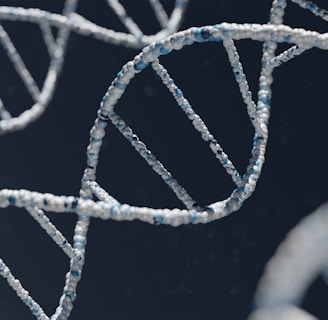
DNA is like the instruction manual of life. Every plant, animal, and human carries DNA inside their cells, and it tells the body how to grow, function, and repair itself. Think of it as a recipe book. If you want to bake the same cake again you need the exact recipe. Without DNA, recreating an extinct species is impossible, because you’d be missing the blueprint. If we had a complete set of dinosaur DNA, in theory, scientists could try to “rebuild” them by following that genetic recipe. Without DNA, it’s like trying to bake a cake with half the recipe missing. You’ll never get the same result.
🦖 Can scientist really revive Dinosaurs?
In reality, dinosaur DNA is far too degraded to use. DNA breaks down after about a million years, and dinosaurs vanished more than 65 million years ago. So while the idea is thrilling, it’s not yet scientifically possible.

🐦Have scientist ever regenerated extinct species?
The answer to this question is "yes". In May 2026, researchers at Colossal Biosciences announced the successful hatching of chicks using an artificial egg platform, reviving the South Island Giant Moa, a bird that went extinct about 500 years ago.
The Species: The Moa stood up to 12 feet tall, one of the largest birds ever.
The Technology: Scientists built bioengineered eggs that mimic natural shells, allowing embryos to grow and hatch.
The Result: 26 healthy chicks hatched in Dallas.
This project shows that while dinosaurs are out of reach but species that disappeared more recently like the moa, dodo, or maybe woolly mammoth may truly walk the Earth again with such efforts.
🐦 How Do Scientists Do It?
Bringing back an extinct species isn’t magic, it’s careful science. Here is how they did it:
Find the DNA Recipe: Every species has DNA, which is like its recipe book. For animals that went extinct recently (like the moa or dodo), scientists can sometimes find DNA preserved in bones, feathers, or frozen remains.
Fill in the Missing Pages: DNA from old samples is often broken or incomplete. Scientists compare it with DNA from a close living relative (like elephants for mammoths, or emus for moa) to fill in the gaps.
Build the Egg or Embryo: Since no living bird can lay a giant moa egg, researchers created an artificial egg. A bioengineered shell that lets the embryo breathe and grow, just like a natural egg. For mammals, they use lab techniques to grow embryos inside surrogate mothers.
Hatch or Birth the Animal: Once the embryo develops fully, it hatches (in birds) or is born (in mammals). That’s how scientists in 2026 managed to hatch 26 moa chicks in Dallas, proving that de‑extinction is possible.
The Sci-Fi movies like Jurassic Park made us dream of dinosaurs, but the real frontier of DNA is about regenerating life today. It also can be used for healing humans, protecting endangered species, and maybe reviving creatures that vanished in recent centuries. The question isn’t “Can we bring back T‑Rex?” but “How can DNA help us heal and reconnect responsibly with nature?”